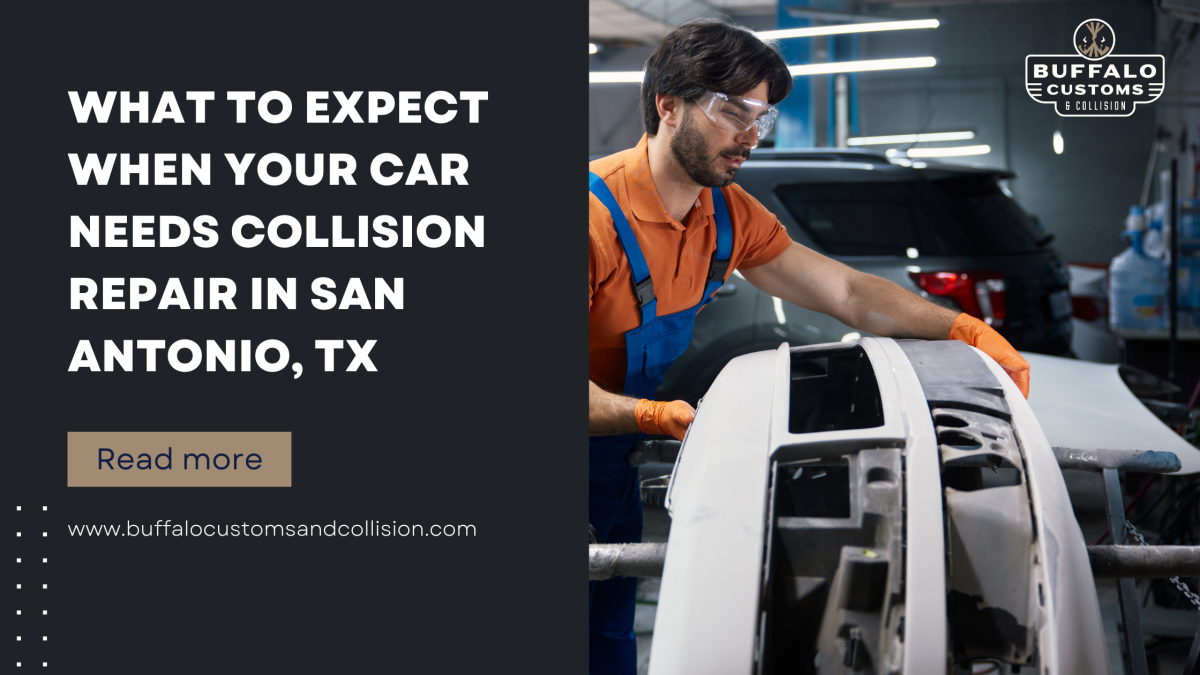
Buffalo Customs & Collision, an independent collision repair shop in San Antonio, Texas, is sharing a detailed overview of its collision repair process to help local drivers understand what to expect after an accident.
From the first phone call to final delivery, the shop focuses on OEM-informed repair procedures, comprehensive damage discovery, and clear communication with both customers and insurance companies. Buffalo’s team says this approach helps restore vehicles closer to factory condition while reducing surprises during the claim.
“Most drivers only go through a major collision repair a few times in their lives, so it’s natural to feel overwhelmed,” said owner Chad Richardson. “Our job is to slow things down, explain each step, and advocate for a repair that follows manufacturer guidance—not just what’s quickest or cheapest for a carrier.”
According to industry resources and repair experts, modern vehicles require repair plans based on published OEM procedures, including structural dimensions, weld locations, part replacement criteria, and pre- and post-repair electronic scans.
A Structured Collision Repair Process
Buffalo’s collision repair process begins with an initial estimate and intake appointment, where technicians document visible damage, gather customer concerns, and help drivers decide whether to file an insurance claim. The shop then works with the insurer to review the estimate, upload photos, and secure initial approvals.
Once repairs are authorized, Buffalo performs a more detailed disassembly and damage analysis—often referred to as blueprinting in the collision repair industry. Organizations like I-CAR describe blueprinting as a standard operating procedure that identifies both visible and hidden damage before repairs begin, helping reduce supplemental changes later in the job.
From there, the repair plan moves through structural correction, mechanical work, body repair, and refinishing. Structural repairs are made using specialized equipment and reference data that compare the vehicle to factory measurements. Mechanical and safety systems are repaired or replaced as needed, including steering, suspension, and electronic components tied to advanced driver assistance systems.
During the refinish stage, Buffalo uses PPG’s digital color tools to match existing paint and blend new coatings into surrounding panels. The goal is to achieve a factory-quality finish that protects the vehicle from UV exposure and doesn’t call attention to repaired panels.
Once paint has cured, technicians reassemble the vehicle, perform post-repair inspections and road testing, and verify that lighting, safety systems, and cosmetic details are in proper working order. Customers are updated throughout the process, and final paperwork includes documentation of OEM procedures followed, parts used, and any relevant scan or calibration results.
Advocating for Safe Repairs, Not Shortcuts
Richardson noted that while Buffalo works with all insurance carriers, the shop’s loyalty is to the vehicle owner.
“Insurance is a big part of collision repair in the U.S., but it shouldn’t dictate unsafe shortcuts,” he said. “We help our San Antonio customers understand when OEM procedures call for a specific part, a structural replacement, or an electronic calibration, and we back that up with documentation so they can make informed choices.”
Contact Information
Buffalo Customs & Collision
13734 Lookout RdSan Antonio, TX 78233
Phone: (210) 773-4708
Website: buffalocustomsandcollision.com
Get your free estimate now here
About Buffalo Customs & Collision
Buffalo Customs & Collision is an independent, owner-operated auto body and collision repair shop in San Antonio, Texas. Founded by veteran technician Chad Richardson, the shop specializes in OEM-focused collision repair, auto body repair, frame and structural work, glass replacement, paint and finish, paintless dent repair, ADAS calibration, and light mechanical services. Buffalo is known for high-quality workmanship, advanced color-matching technology, full insurance claim support, and a customer-first approach that puts driver safety ahead of insurer cost-cutting.